Keloids

Legacy Dermatology  |  General Dermatology Services
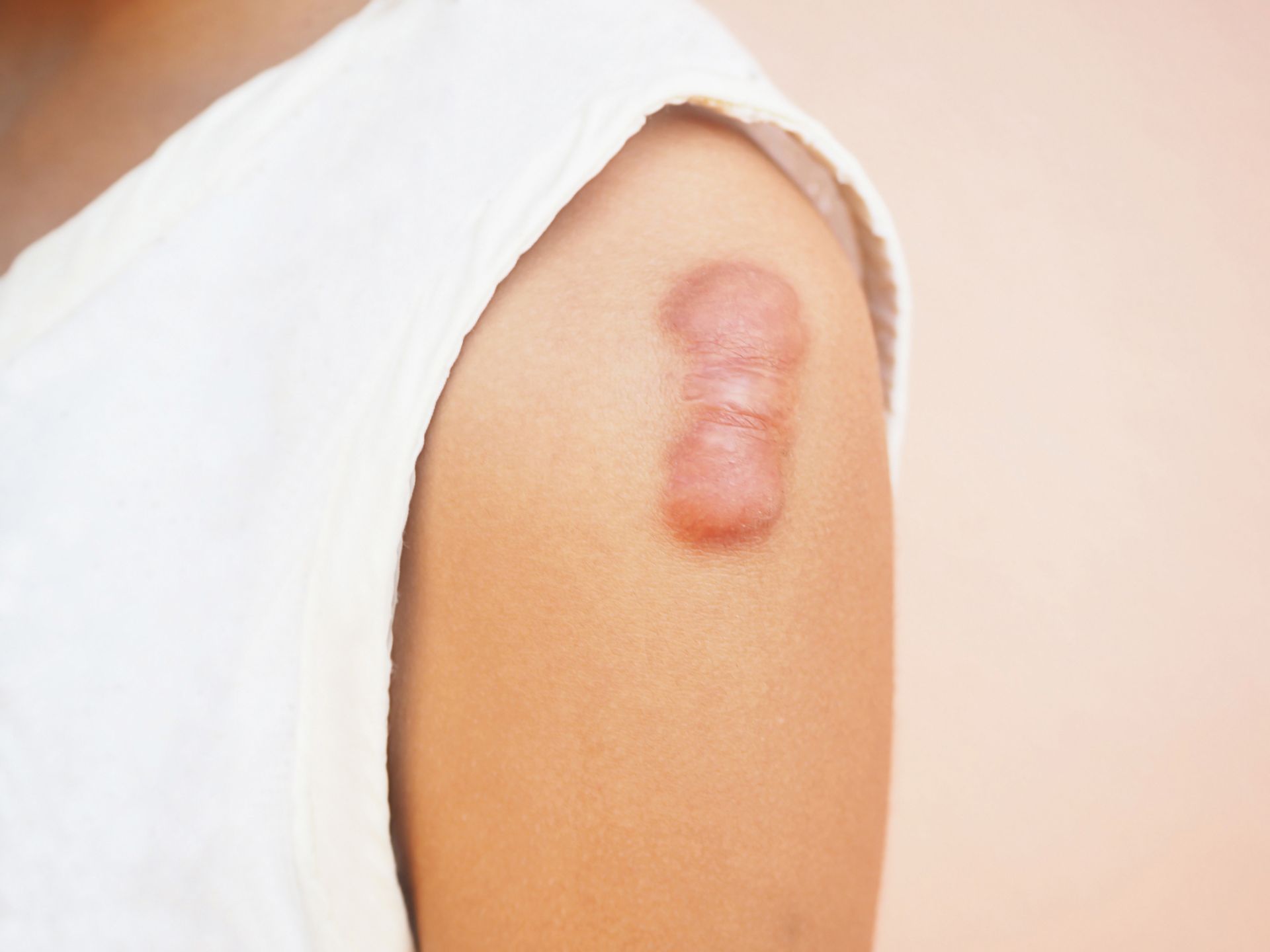
  • closeup of large keloid scar on white female patient's shoulder

    Slide title

    Write your caption here
    Button

Keloid Scars

A keloid is a type of scar that forms when the body overproduces collagen during the healing process. Keloids are benign (non-cancerous) and are typically raised, smooth, and shiny. They can vary in size and shape, and can appear anywhere on the body.


Keloids are more common in people with darker skin tones and tend to run in families. They can form after any type of injury or trauma to the skin, including cuts, burns, and piercings.


Keloids can be quite unsightly and can cause discomfort or irritation. In some cases, they can even interfere with the movement of joints. While they are not dangerous, they can be bothersome and affect a person's self-esteem.


Treatment for keloids can vary depending on the size, location, and severity of the scar. Some common treatment options include corticosteroid injections, cryotherapy (freezing the scar with liquid nitrogen), laser therapy, and surgery. It is important to work with a healthcare provider to determine the best treatment option for you.


To prevent the formation of keloids, it is important to avoid or minimize trauma to the skin whenever possible. If you do experience a wound or injury, it is important to properly care for the area to promote healthy healing. This may include cleaning the wound, protecting it with a bandage, and keeping the area moist.


If you think you may have a keloid and want to know about your treatment options, contact us today for an appointment.

— SCHEDULE AN APPOINTMENT

Frequently Asked Questions

  • WHAT IS A KELOID, AND WHY DO SOME PEOPLE DEVELOP THEM?

    A keloid is an overgrowth of scar tissue that extends beyond the boundaries of the original wound. It forms when the body overproduces collagen during the healing process. Keloids are benign (non-cancerous) and can develop after any skin injury — including cuts, burns, surgical incisions, acne, and ear or body piercings. They are significantly more common in individuals with darker skin tones and tend to run in families. 

  • ARE KELOIDS MORE COMMON IN PATIENTS WITH SKIN OF COLOR?

    Yes. Keloids occur 15 to 20 times more often in individuals with dark skin compared to those with light skin, making them one of the most important dermatologic concerns for African, Hispanic, and Asian patients. Dr. Bradley's specialty focus on skin of color and keloids means he brings specific expertise and culturally informed treatment planning to every patient.

  • WHAT ARE THE TREATMENT OPTIONS FOR KELOIDS AT LEGACY DERMATOLOGY?

    Treatment options depend on the keloid's size, location, and severity. Common approaches include corticosteroid injections (to flatten and soften the scar), cryotherapy (freezing with liquid nitrogen), laser therapy (to reduce redness and improve texture), and surgical removal. Because keloids can recur after surgery, surgical excision is often combined with another treatment such as injections or radiation. Dr. Bradley will create a personalized treatment plan based on your specific situation.

  • CAN KELOIDS BE PREVENTED?

    Keloids cannot always be prevented, especially in individuals with a genetic predisposition. However, you can reduce your risk by minimizing unnecessary skin trauma, keeping wounds clean and moist during healing, and using silicone gel sheets or pressure dressings on healing skin. Patients with a history of keloids should inform their dermatologist before undergoing any elective procedure.

  • DO KELOIDS GROW BACK AFTER TREATMENT?

    Keloids have a tendency to recur, particularly after surgical removal alone. Recurrence rates are significantly reduced when surgery is combined with corticosteroid injections, laser therapy, or other post-operative treatments. Dr. Bradley will discuss evidence-based combination strategies to minimize the risk of recurrence and achieve the best possible outcome for your scar.