Hair Loss

Legacy Dermatology  |  General Dermatology Services

Hair Loss Diagnosis & Treatment

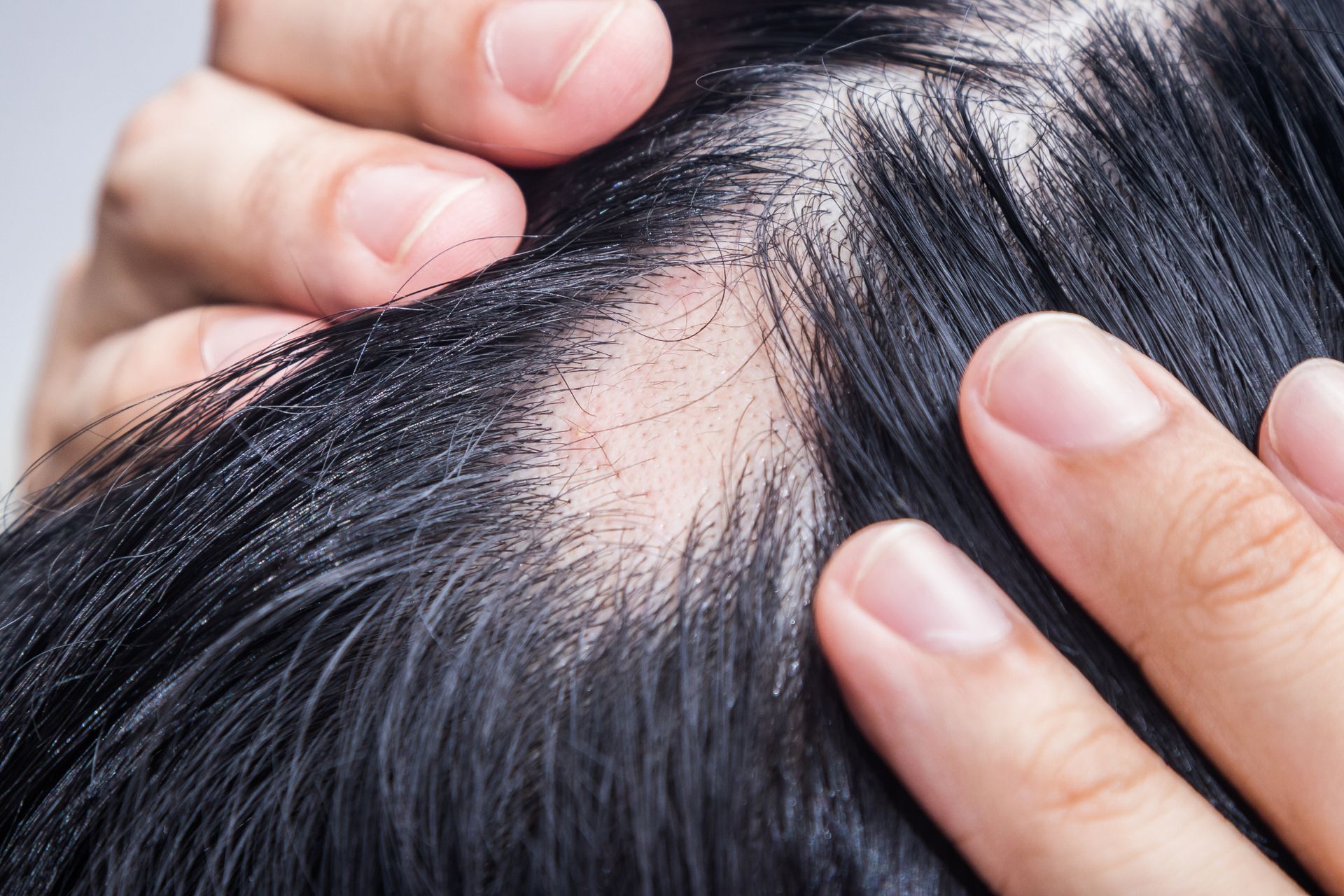
Hair loss, or alopecia, can be a frustrating and distressing condition that affects people of all ages. There are many possible causes of hair loss, including genetics, illness, medications, and other factors. If you are experiencing hair loss, our dermatology team can help.


At our clinic, we offer a range of treatments to help manage hair loss and promote the growth of healthy, strong hair. These treatments may include medications, laser therapy, and platelet-rich plasma (PRP) therapy.


Medications such as minoxidil and finasteride can help stimulate hair growth and slow hair loss. Laser therapy uses low-level lasers to stimulate the hair follicles and promote hair growth. PRP therapy involves injecting a concentration of platelets into the scalp to stimulate hair growth and improve the health of the hair and scalp.


In addition to these treatments, our dermatologists can also provide you with advice on how to care for your hair and scalp to promote healthy hair growth. This may include recommendations for shampoos, conditioners, and other hair care products, as well as tips on styling and caring for your hair.


If you are experiencing hair loss and would like to explore your treatment options, we encourage you to make an appointment with our dermatologist. We are here to help you manage your hair loss and promote the growth of healthy, strong hair. Contact us today for an appointment.

— SCHEDULE AN APPOINTMENT

Frequently Asked Questions

  • WHAT ARE THE MOST COMMON CAUSES OF HAIR LOSS TREATED BY A DERMATOLOGIST?

    The most common causes of hair loss include androgenetic alopecia (hereditary pattern baldness), alopecia areata (an autoimmune condition causing patchy loss), telogen effluvium (diffuse shedding triggered by stress, illness, or hormonal changes), traction alopecia (caused by hairstyles that pull on the scalp), and scalp conditions such as seborrheic dermatitis or ringworm. A dermatologist can perform a thorough evaluation to identify the underlying cause and recommend targeted treatment.

  • DOES LEGACY DERMATOLOGY TREAT HAIR LOSS CONDITIONS COMMON IN PATIENTS WITH SKIN OF COLOR?

    Yes. Dr. Bradley has specific expertise in hair loss conditions that disproportionately affect patients of color, including central centrifugal cicatricial alopecia (CCCA), traction alopecia, and folliculitis decalvans. These conditions require culturally informed care, including guidance on hair care practices. If you are experiencing hair loss and have textured or chemically treated hair, Dr. Bradley can provide tailored evaluation and treatment.

  • WHAT HAIR LOSS TREATMENTS ARE AVAILABLE AT LEGACY DERMATOLOGY?

    Legacy Dermatology offers several evidence-based hair loss treatments, including topical and oral medications such as minoxidil and finasteride, platelet-rich plasma (PRP) therapy (which uses concentrated growth factors from your own blood to stimulate follicles), and low-level laser therapy. The appropriate treatment depends on the diagnosis, the extent of hair loss, and individual patient factors.

  • WHAT IS PRP THERAPY FOR HAIR LOSS AND HOW DOES IT WORK?

    Platelet-rich plasma (PRP) therapy is a minimally invasive treatment in which a small amount of your blood is drawn, processed to concentrate the growth factors and platelets, and then injected into the scalp. These growth factors help stimulate dormant hair follicles, improve the health of the scalp, and promote the growth of thicker, stronger hair. Multiple sessions are typically needed for optimal results.

  • WHEN SHOULD I SEE A DERMATOLOGIST FOR HAIR LOSS?

    You should see a dermatologist if you notice sudden or patchy hair loss, if your hair is thinning rapidly, if you have scalp itching, scaling, or redness along with hair loss, or if over-the-counter remedies have not been effective. Early diagnosis is key to preserving as much hair as possible, since some types of hair loss — particularly scarring alopecias — can be permanent if not treated promptly.